
Precision by design. Craftsmanship by choice.
Every Salty Buoy project begins with engineering discipline and ends with award-winning fabrication. Here is what that looks like in practice.
We start with your vessel
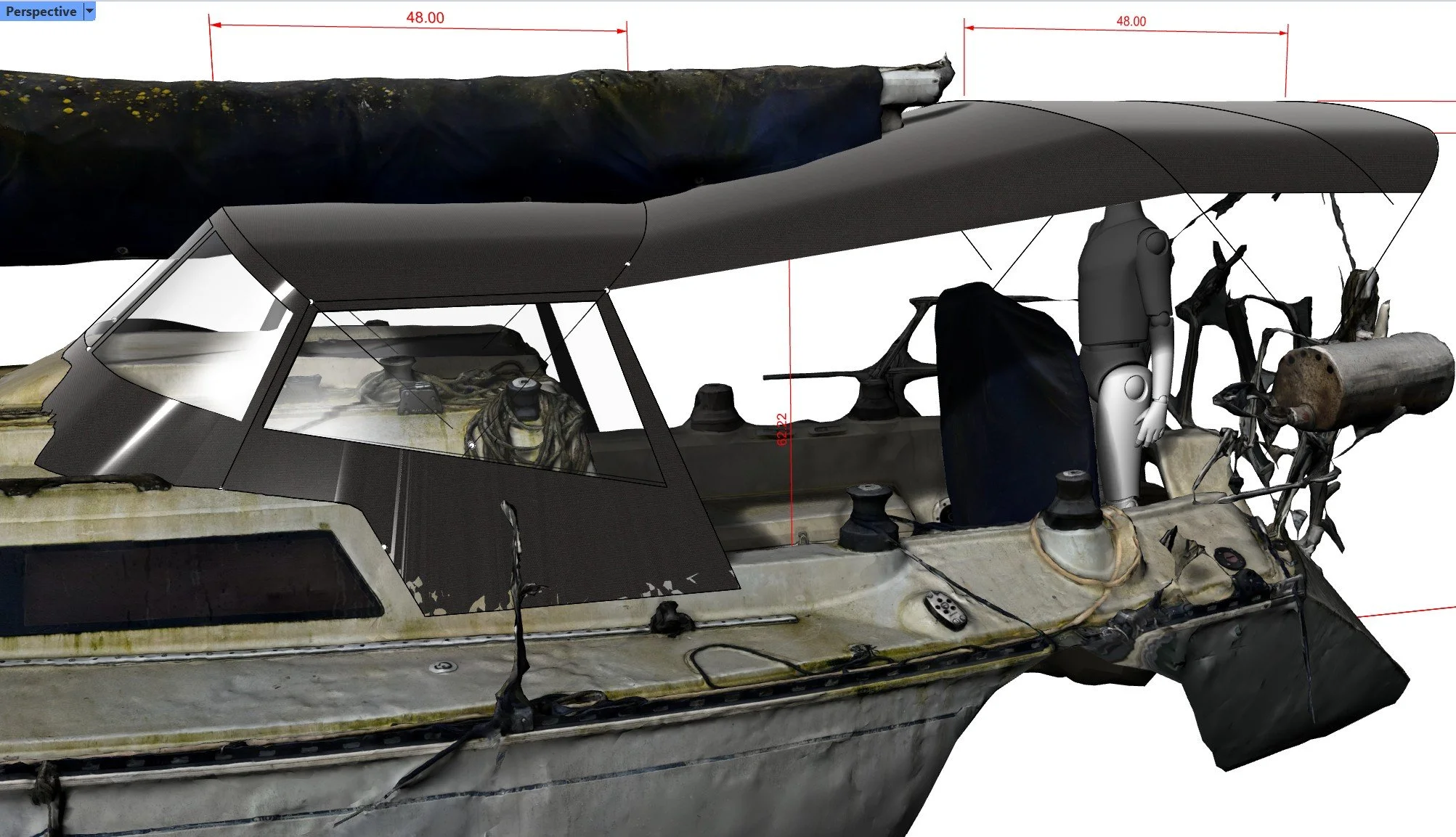
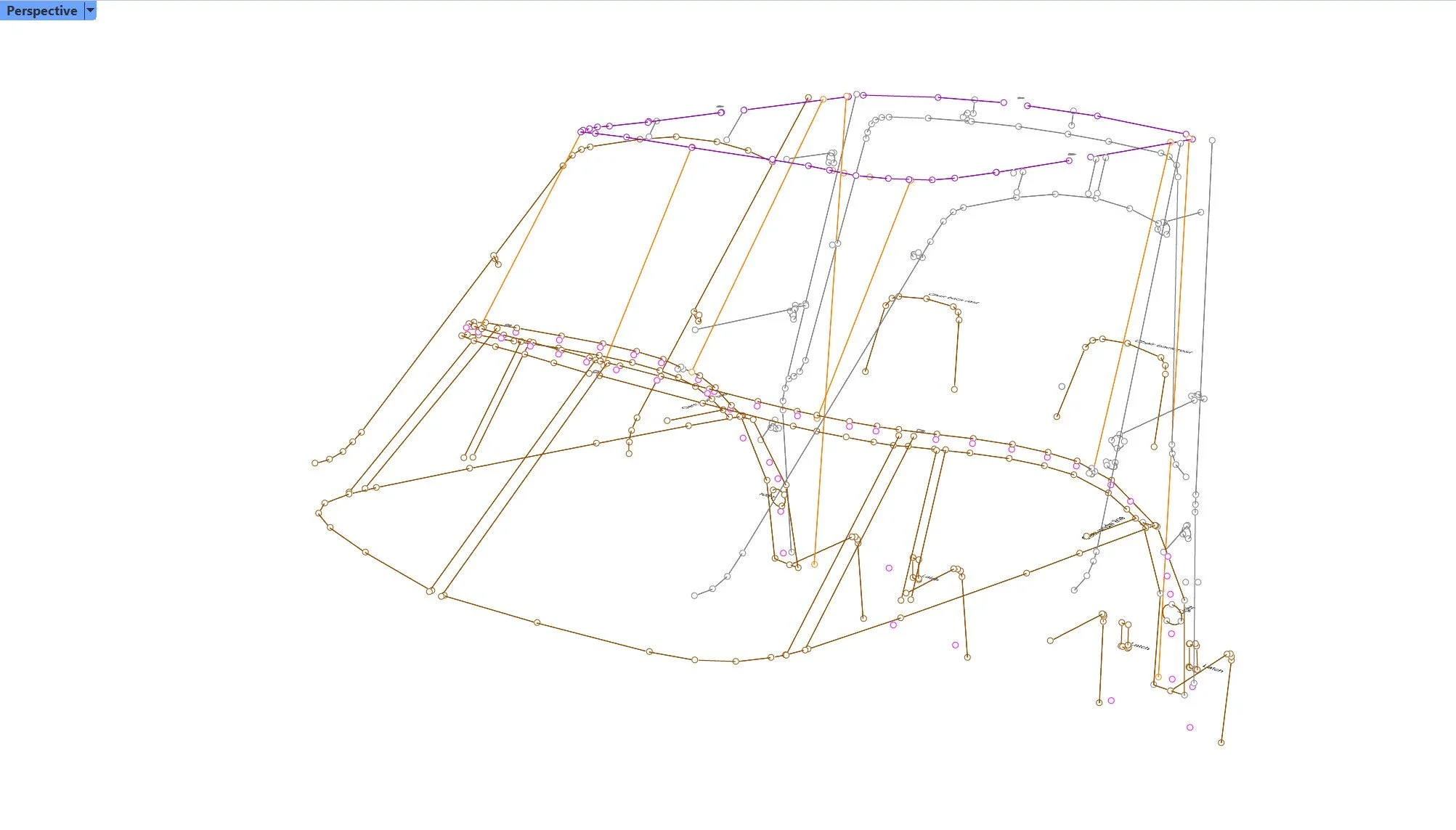
Before a single measurement is taken, we spend time understanding how you use your boat — the passages you run, the conditions you encounter, the aesthetic standard your vessel demands. For larger or more complex projects, we use photogrammetry capture tools to develop scaled concept geometry ahead of the first site visit. This means you can review proportions, sight lines, and layout options before fabrication begins — a level of pre-project clarity most shops cannot offer.
Measured to instrument grade
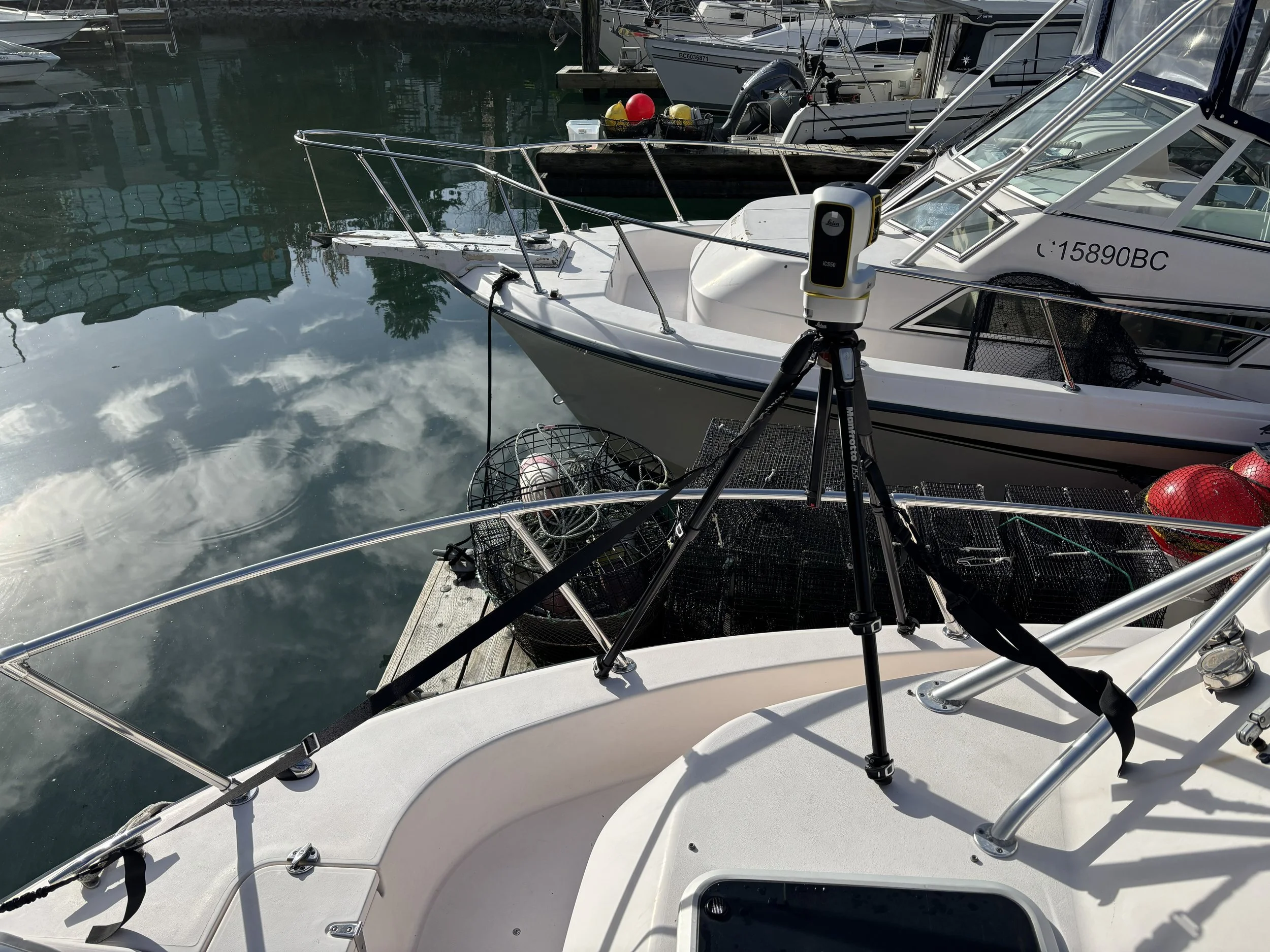
Salty Buoy captures vessel geometry using professional-grade instrumentation. Our primary measurement system is the Leica iCS50, a professional capture instrument used in engineering and precision manufacturing contexts. The result is dimensional data of an accuracy class that physical templates simply cannot achieve.
This matters most on complex or high-value vessels where panel fit is not negotiable — where an enclosure must meet a hull curve with zero visible gap, where acrylic bonded panels must align across multiple frames without distortion, or where a dodger must integrate with custom deck hardware to within millimetres.
Designed before it is built.
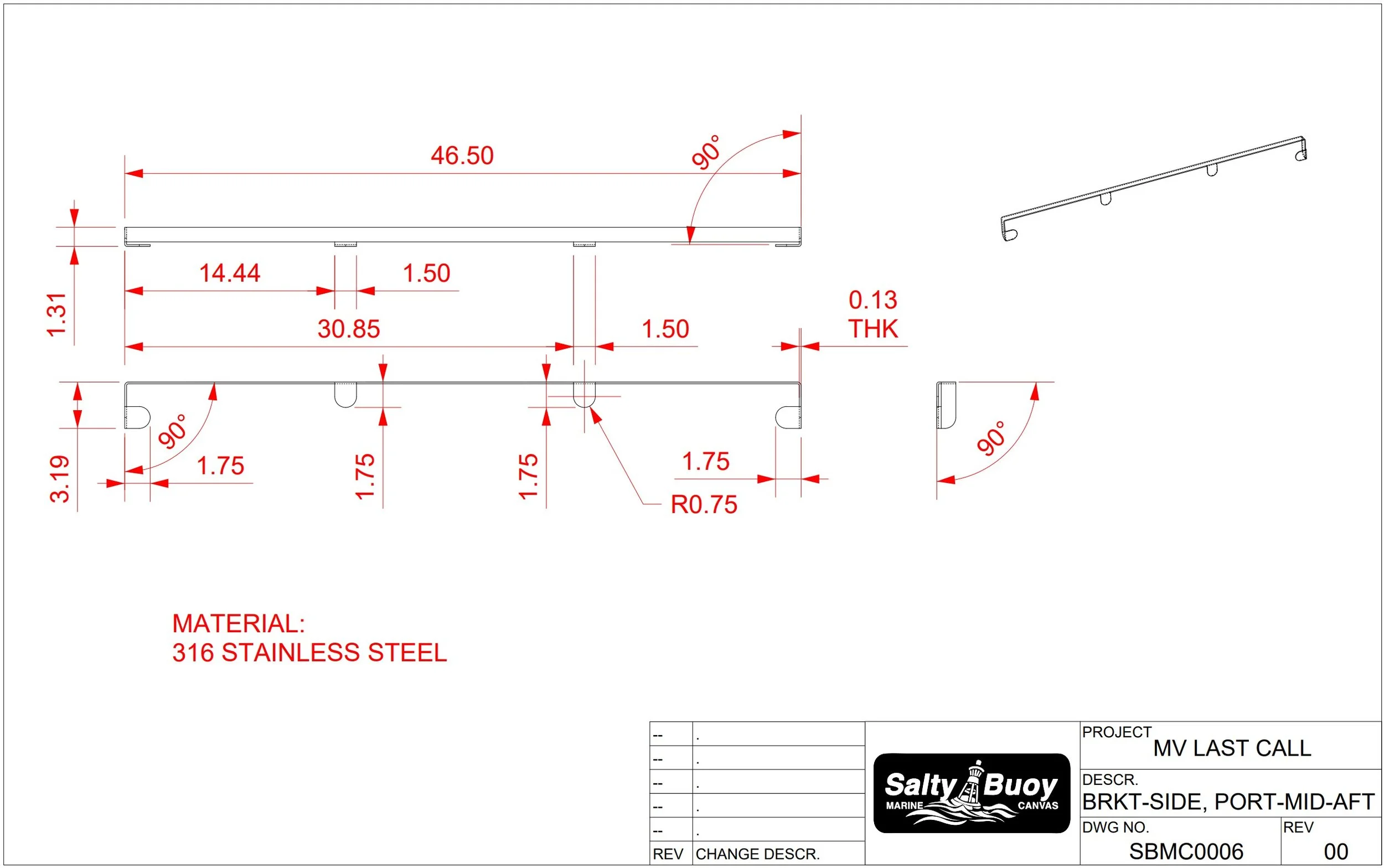
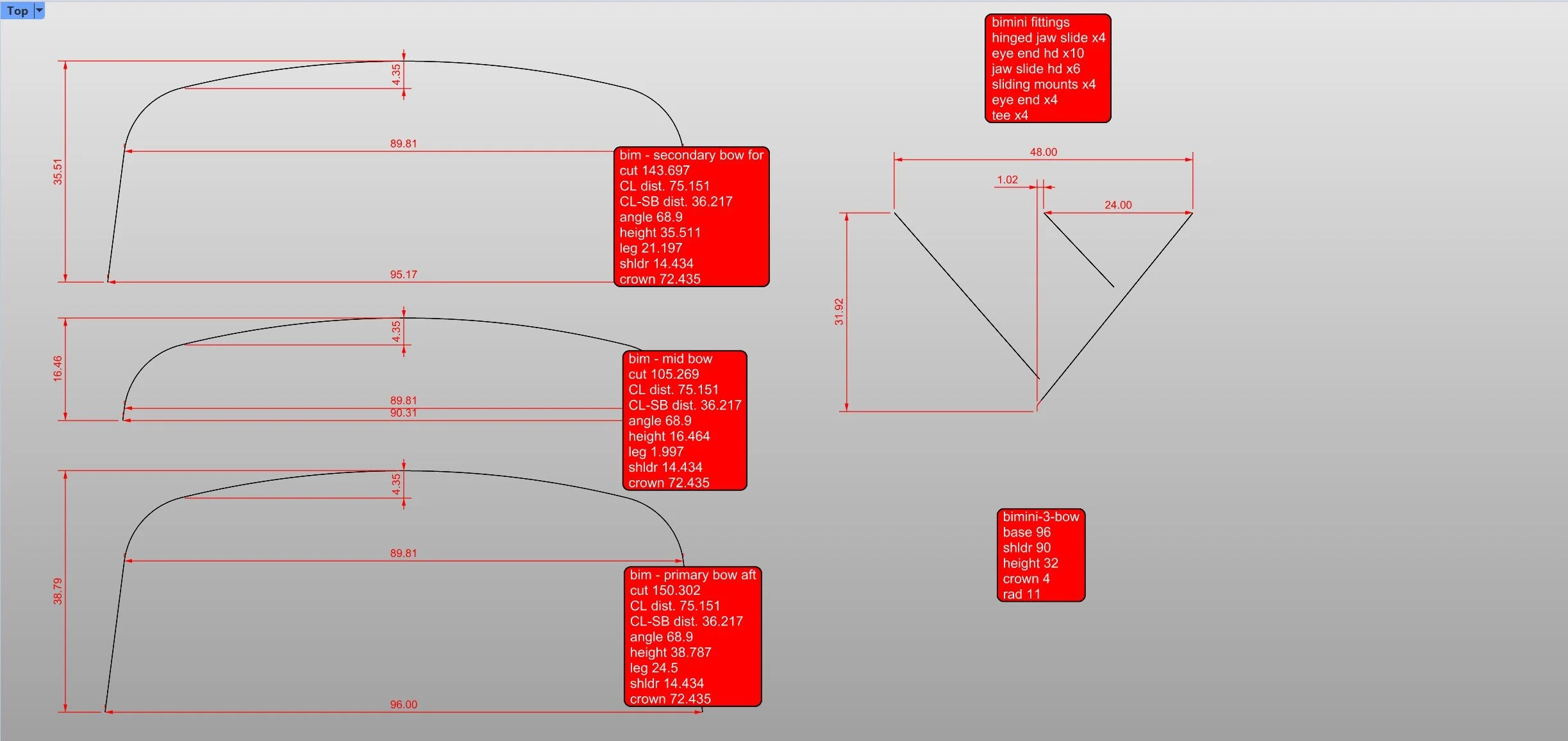
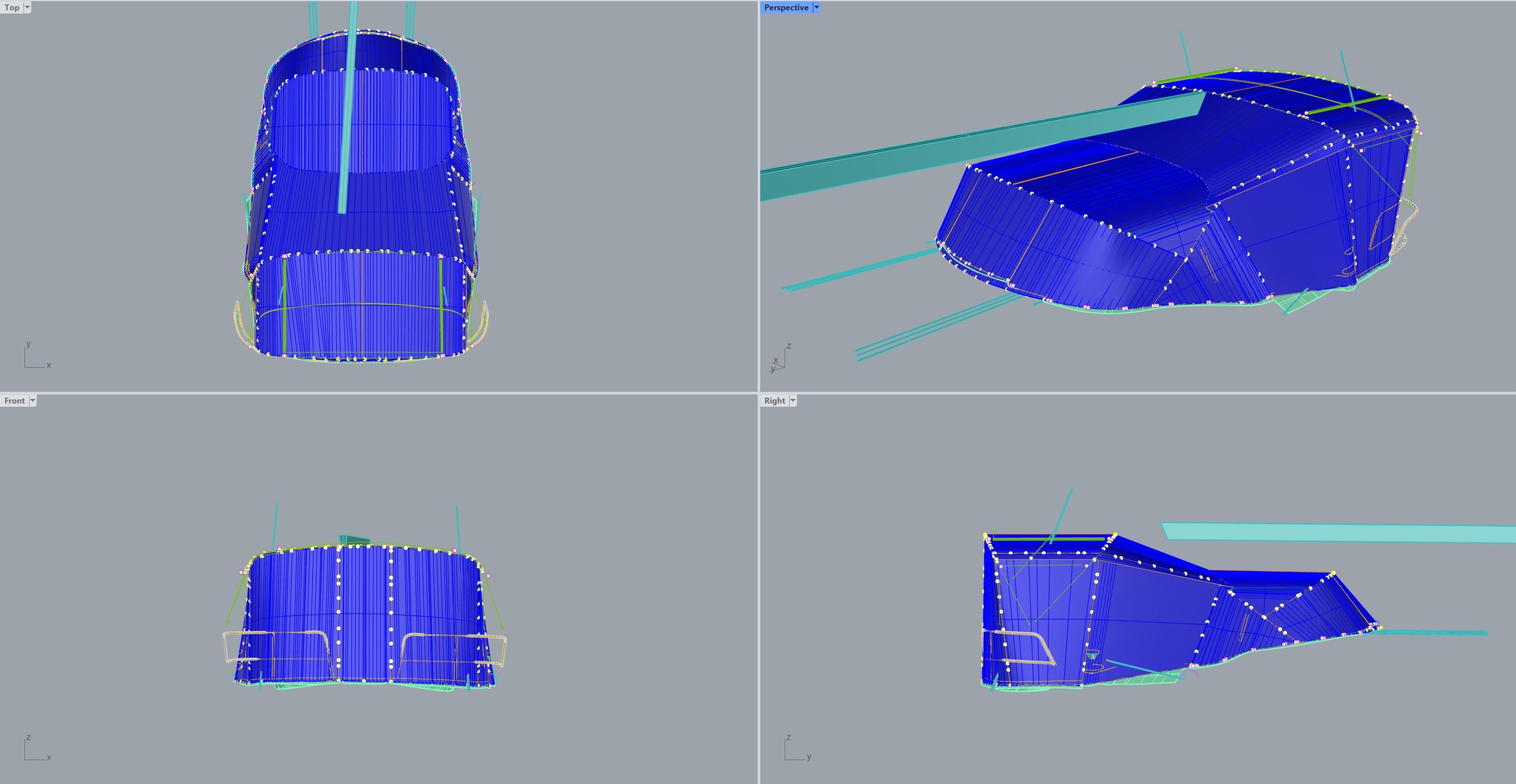
Captured geometry moves directly into CAD, where every frame and panel is designed digitally before a single piece of tube is bent or fabric cut. Frame geometry — tube lengths, bend angles, fitting positions are developed and validated in the model. Panel shapes are laid out against the frame geometry so fit is confirmed in the design, not discovered on the boat.
This engineering-first approach is a direct product of a career background in design and engineering before marine fabrication. It is the difference between a canvas project built by eye and one built to a specification.
Layout once. Cut right.
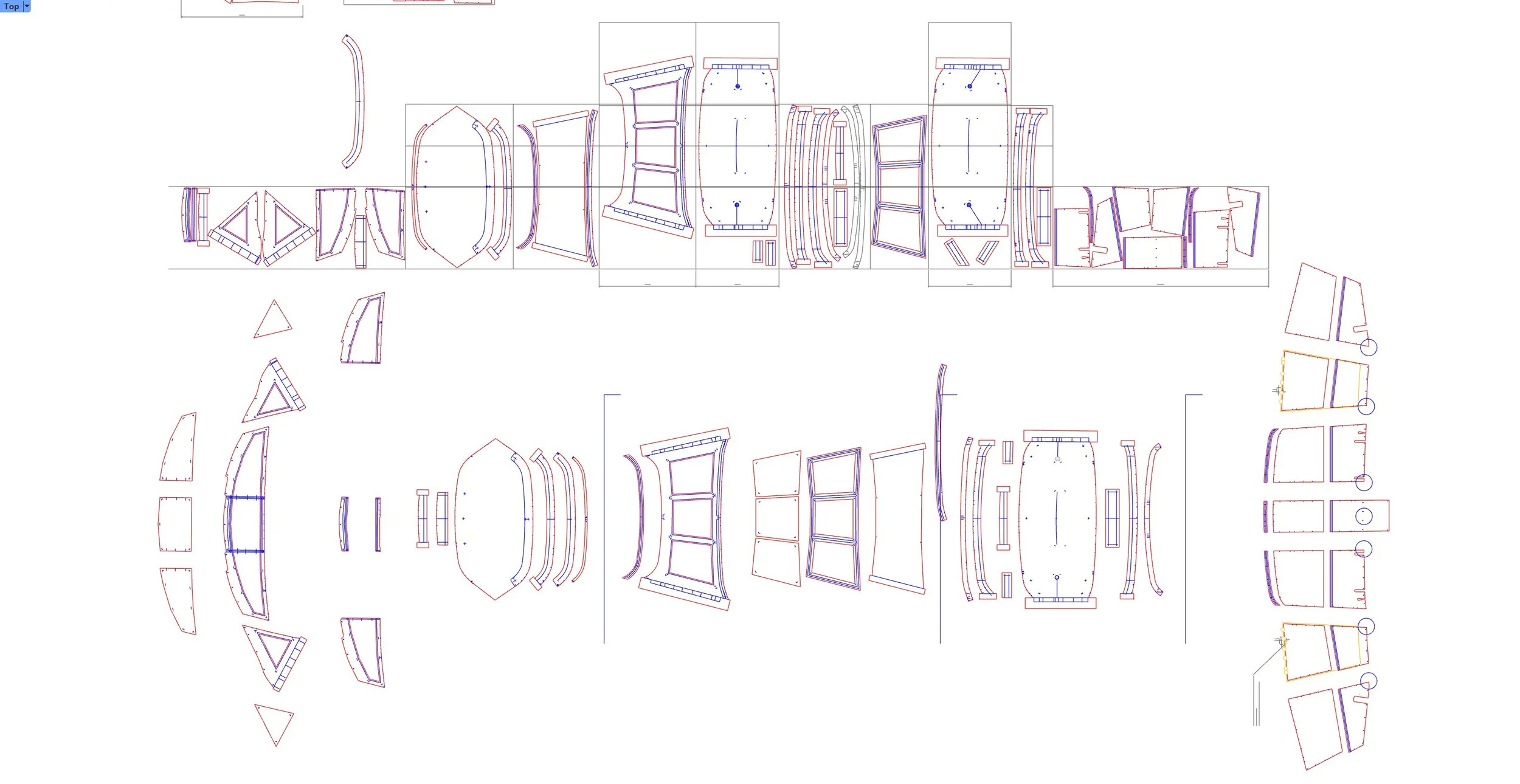
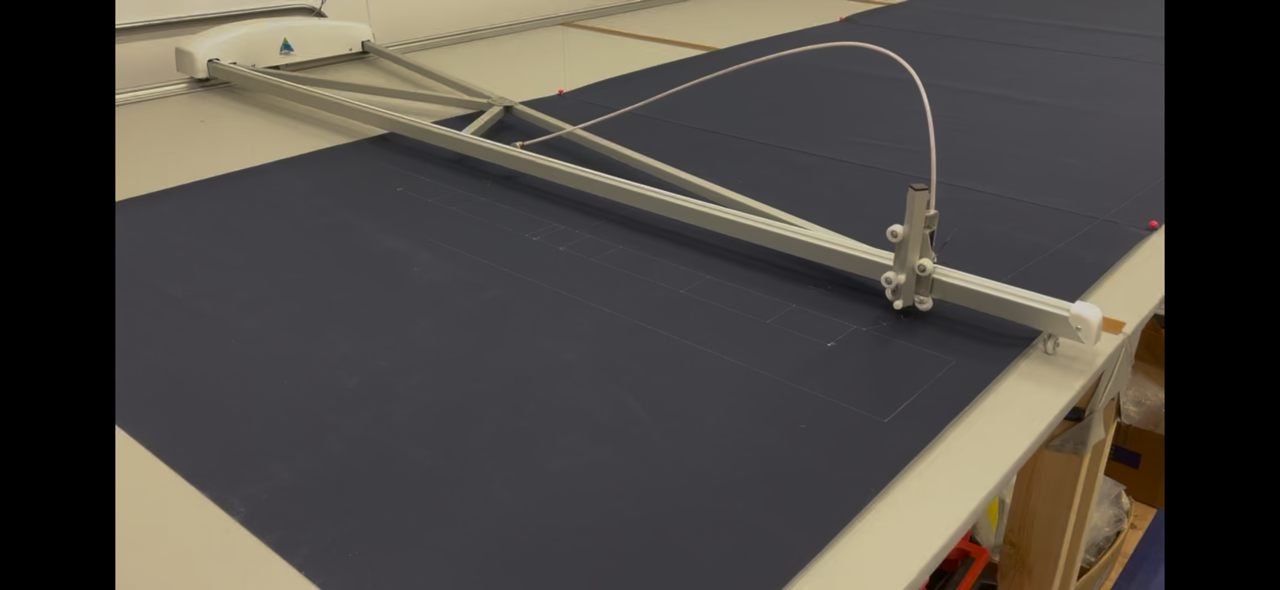
Panel patterns are output from CAD directly to a CNC plotter, which lays out every piece to exact digital dimensions. There is no freehand tracing, no pattern drift between pieces, and reduced accumulation of small errors across a complex enclosure.
Your project is also stored as a permanent digital file. Should a panel require replacement years down the line — whether from UV degradation, impact damage, or a vessel modification — it can be rebuilt to the original specification without returning to measure the boat.
Salty Buoy holds the designation of Certified Master Fabric Craftsman in the Marine Exterior Specialty — the highest professional credential available in the marine canvas trade, awarded by the Advanced Textiles Association. The fabrication standard this represents is not ceremonial. It is the standard applied to every project, from a straightforward bimini to a full semi-rigid acrylic superyacht enclosure.
In 2025, this standard was independently recognized with both the International Achievement Award and the Best of Canada Award for a bonded clear acrylic marine enclosure for a luxury yacht. These are not regional trade show awards — they represent peer evaluation against international work at the highest level of the craft.
Built to the standard that earned an international award.
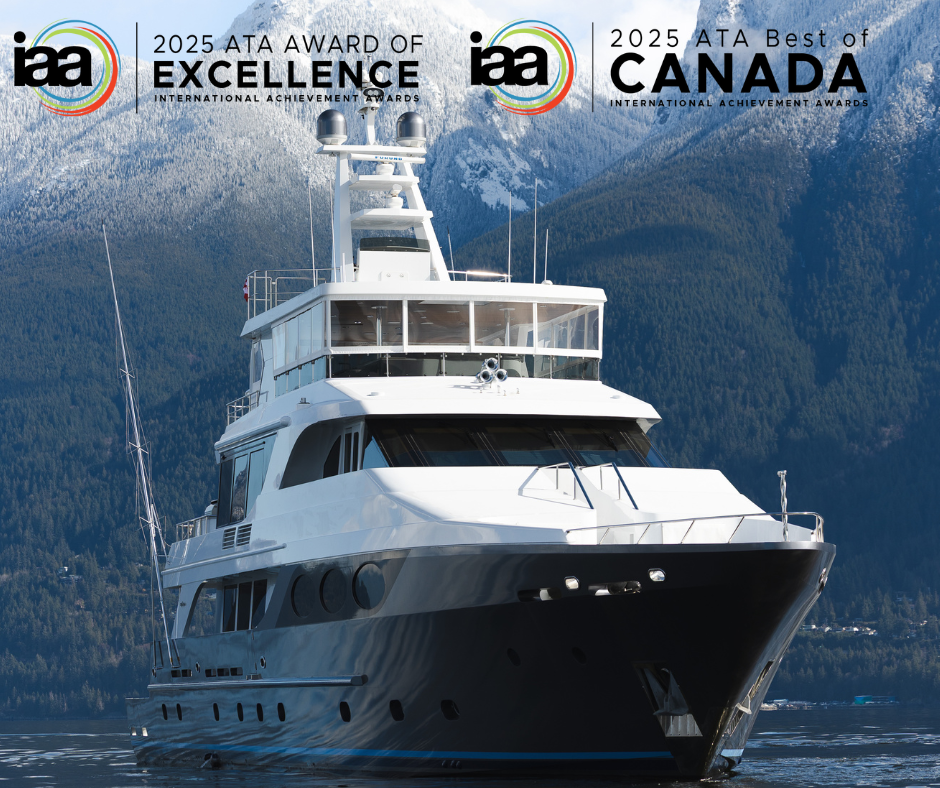
Photo credit Brett Hitchins @BrettRyanStudios
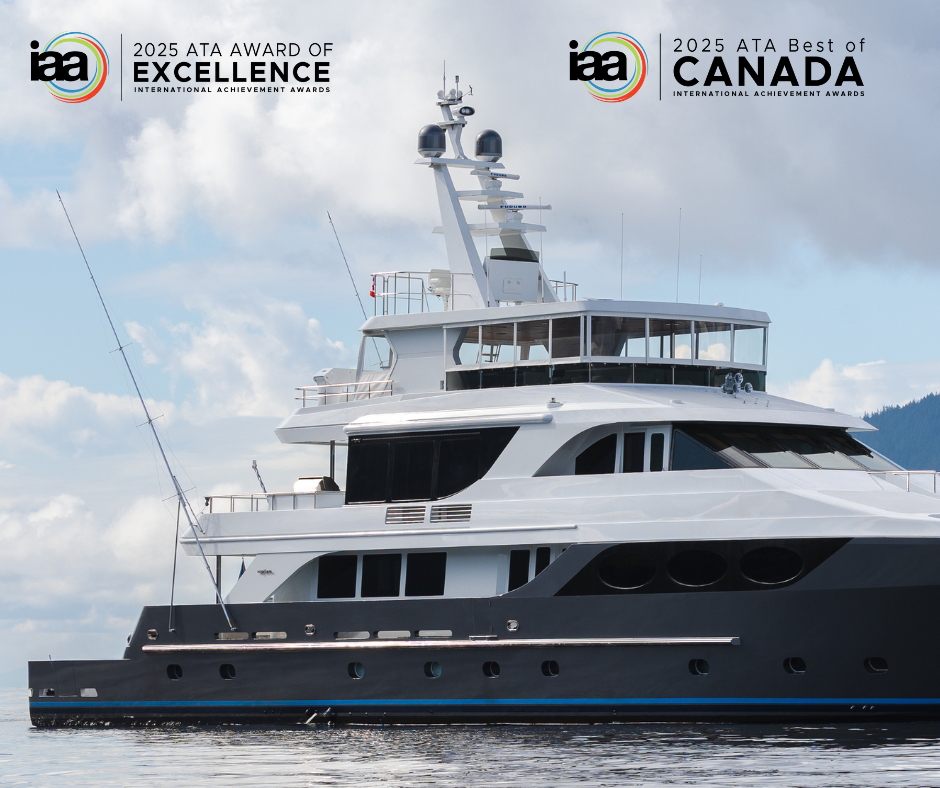
Photo credit Brett Hitchins @BrettRyanStudios
A different class of result.
The combination of instrument-grade measurement, CAD design, CNC fabrication, and master-level craftsmanship produces enclosures, dodgers, and biminis that simply fit and perform differently from traditionally fabricated canvas work.
Because we take on a limited number of projects each year, every vessel receives the full process — no shortcuts to move to the next job.
If your vessel deserves that standard, we would be glad to hear about it.